The Sceadugenga

Sceadugenga, Sceadugenga slipping through the trees
Insidious and dangerous, it willl bring you to your knees
Hiding in plain sight, their true nature you cannot see
Sceadugenga, Sceadugenga it is deaf to your pleas

Shadow-stalker, shadow-stalker watching your every move
Seizing, twisting all your words so that it will never lose
Backing you in a corner with allegations it can never prove
Shadow-stalker, shadow-stalker no fool sees through their ruse

Dark-lover, dark-lover it opens its gaping maw
Attacking all your loved ones it leaves you bruised and raw
Promising such riches has left them wanting more
Dark-lover, dark-lover it has left their hāma poor

Sceadugenga, Sceadugenga of you we have no fear
Harken to the Old Ways and Sunne’s light is ever near
Banish all those shadows and wipe away your tears
Sceadugenga, Sceadugenga there’s nothing for you here

Runic Dreaming – Peorth

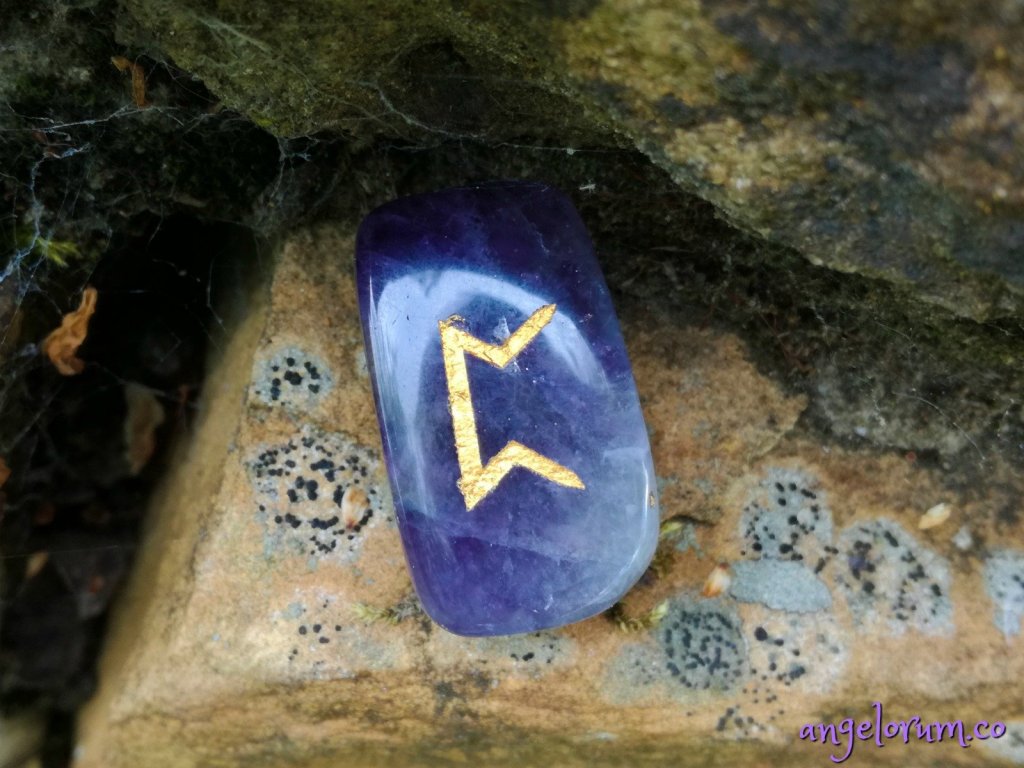
Peorþ / Peorth is pronounced “PAY-OR-TH”. It is a most fascinating rune because not very much is really known of it. People have speculated about the meaning of the word based on clues from the rune poem and have drawn somewhat different conclusions on it from meaning a “dice box” to “chessman” and even sexual relations of some description. The issue with the chess connation is that chess did not arrive in England until after the Norman Conquest, long after the rune poem was written. Pollington states in his “Rudiments of Runelore” that it could reflect the filling and emptying of the primeval well of past time which overflows when an age of the world passes, resulting in cataclysmic events not unlike the Norse belief in Ragnarok which is not attested in Anglo-Saxon sources. He also mentions it may derive from the Celtic word “ceirt” which is the ogham name for the apple tree. Alaric Albertsson believes it relates to gaming in general terms due to the rune poem and its description. He states there is an emphasis on the friendship, laughter and cheer associated with gaming and that the mystery with this rune associates with the mystery of play itself.

For me it is a community rune, reflective of the lifelong need for “play” with friends, family and community and the development of those bonds through such pastimes. It could be argued that the rune looks not unlike a cup that has been shifted horizontally in order to dispense dice from within. I must say that the Dungeons & Dragons nerd in me finds this quite appealing. The random nature of the outcome of play is thus reflective of this rune in terms of indicating that sometimes our fate is out of our hands – literally dependent on the throw of the dice! I don’t find that to be in a negative way, however, more indicative of the nature of human beings that are willing to play along and see where the game takes us. Wild abandon, perhaps, somewhat carefree.

This brings with it the other side of the coin in that it may also indicate the need to get serious and stop playing around. Interpretation of this rune alongside any others in you cast/draw is therefore key to working out how it relates to the querent as an individual.

The more I have begun to explore the runes and consider their meaning, the more I have found them to be relatable in every part of our lives. They truly pull together different aspects of human existence and coalesce this into genuine meaning that can help us to move forward with our lives in a way that can be fulfilling and cognisant of the factors at play in our daily lives. Mastery of the runes is a long way off, as interpretation of them is fraught with danger and difficulty, yet in time I think the runes can and will be useful to me in helping me and others through this confusing life.

Thank you for coming with me on the journey, I look forward to exploring the remaining runes in due course.

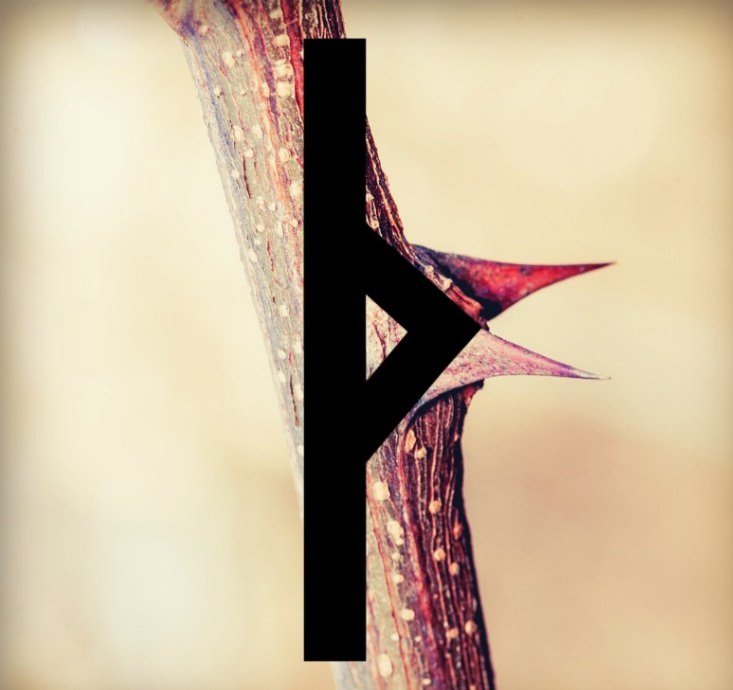
Runic Dreaming – Thorn

Phonetic value as “th” as in thorn.

Now this is either Þorn (Thorn) or Þyrse (Thyrse), depending, it seems, on your interpretation of the rune poems. Certainly, the meaning differs between the Icelandic and Norwegian rune poems as compared to the Anglo-Saxon and some have clearly mused on the possibility that the Anglo-Saxon scribe of the rune poem opted for a less “Pagan” version of the poem so as not to draw upon the mythology of giants and other creatures.

Despite the differences in the poems as regards to whether they refer to a thorn or a thyrse, the implications remain similar: This is not a good rune to see in a reading! Thorns are sharp and painful. They represent at the least, discomfort, and threat – even a place that is almost impossible to get to like the giant thorns that surrounded the palace during the 100-year slumber of Sleeping Beauty. The hawthorn tree is attributed with having blossoms which are considered unlucky to some. For me, the hawthorn is and was used as a barrier to farmers fields, a barrier between their land and that which is not their land. Inner and outer, a painful exit or a painful entry from one place to the next. The comparisons can be drawn between moving from one life event to another and having to endure significant hardship to do so.

Hawthorn berries, or haws, are usually bright red, the international symbol of danger. Despite this, the berries are believed to have several health benefits, loaded as they are with antioxidants in the form of polyphenols so at the right time of year, they can be prepared appropriately for consumption. Therefore, in my view this relates strongly to the very nature of life itself. If the rune presents itself during the season where it is in full fruit, then it may represent hardship coupled with potential reward – I.E. that the challenge will be testing, but there may also be a reward. But at what cost, however?

Uprooting a hawthorn is said to be bad luck, and similarly given that it represents painful challenge and potential misery, it is not a simple case of uprooting it at the source, it must be handled carefully, recognised for the fact that life yields challenges and rewards, not always in equal measure, but that no life will ever been complete if we have not had our capabilities tested from time to time.

When hawthorn is laid as hedgerows, over time it becomes an impenetrable mass, representative of what can happen in life if you ignore your problems for too long – they become very difficult to resolve! The rune itself clearly looks very much like an upright thorn and needs little in the way of understanding to perceive it as such. It is a warning when it appears in a divination, and warnings should be heeded. Consider again the position and prominence of it upon the cloth if you are scattering runes as the interpretation of the warning will hinge upon how close it is to your spiritual centre and what relationship it appears to be having with any other runes.

Clearly it suggests at the very least to proceed with caution. Keep your eyes open as although it represents a hazard, it does not necessarily mean interaction with that hazard is unavoidable. With preparation and understanding, you may be able to recognise the threat in time and avoid it, just as you would not wilfully blunder into a hawthorn bush. As a result of the cautionary nature of this rune, it is also a strong protective rune when employed in charms or bindrunes when it comes to protecting something you may not want to be commonly known. This is not necessarily in reaction to a known threat, more as a protective presence to prevent someone or something from blundering into your protected enclosure – like a runic hawthorn hedgerow.

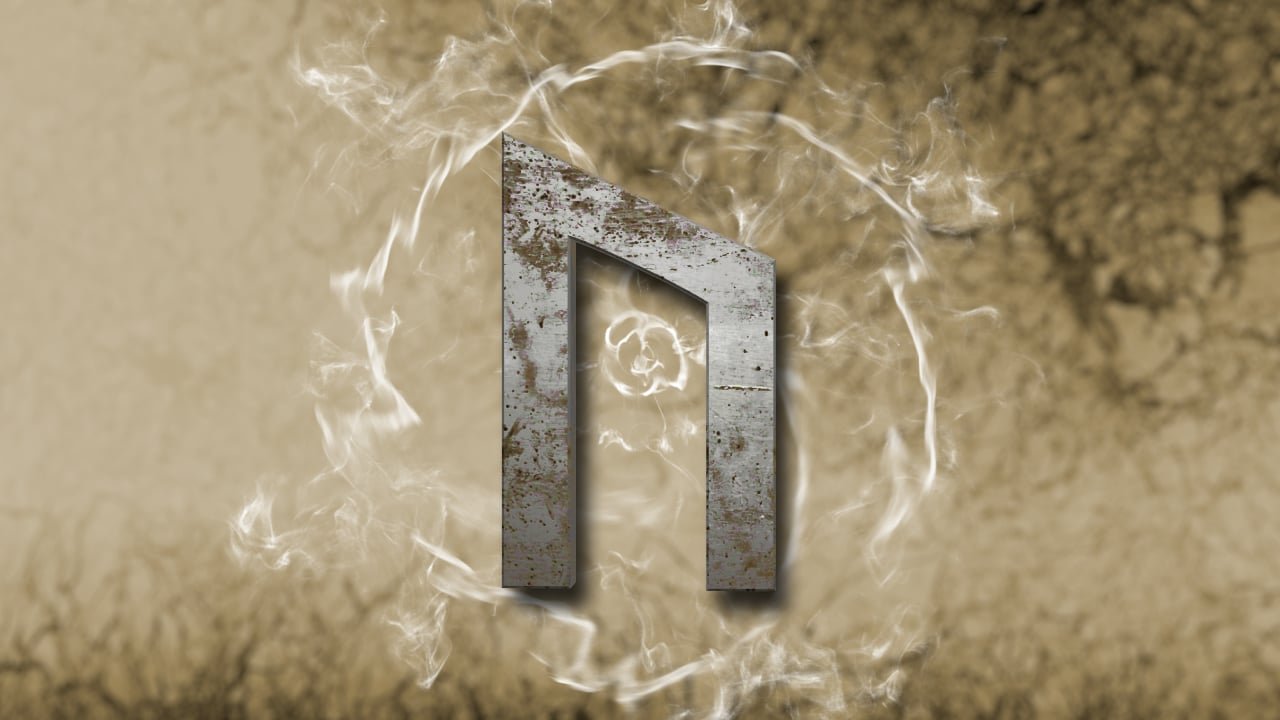
Runic Dreaming – Ur


Ur is pronounced Oo-r.

All the books and rune poems indicate that this rune represents the mighty Aurochs, the primogenitor of the modern cow, essentially. It was said to be difficult to domesticate, with large horns, a wild temperament and if you could kill one successfully, it was the measure of a man’s skill and courage to do so. It has associations with rites of passage from childhood to adulthood. The rune itself is almost as if two horns are pointed downwards in a power position, as if the mighty beast is preparing to charge or act in defence, making use of its weaponry to its full potential.

I certainly feel that from contemplating on this rune. I feel the potential of it contained within, the raw power at the heart of it because let’s not forget the associations with the myths of the Northern tradition, the great “Auðumbla”, the primeval cow that provided milk to Ymir. To be fair, the story is somewhat convoluted and a little confusing, but my takeaway from that is that the cow represents a symbol of sustaining life and remaining resilient. Cows provide milk to us all and the amount consumed globally is enormous. The quiet strength of the aurochs then, that wild side of bovine nature, suggests to me that this rune is one that may symbolise the need for strength in those difficult times, whether that be now or in the future. Courage, resilience and strength – the need to tap into those when the going gets tough. The rune suggests, at least to me, that if it were to come up in a divination then I would have the strength I need to see me through the challenges ahead, perhaps in spite of those challenges.

I find the rune can be a comfort in times when the need for self-empowerment is pressing. I can picture that great aurochs with head bowed, stamping its hooves prior to the charge. There are methods promoted by others of spells, bindrunes or charms that may help to support people in difficult times.

Again, depending on how you choose to use the runes for divination, as in the method you use, the interpretation of the rune will be different. If you do single draws, two-rune draws, three-rune draws or the scatter approach referred to by Tacitus in his writings, have a mind to the position of the rune in conjunction with any others and how that relates to yours or your subject’s position. If casting upon the cloth, consider its location from the centre and positioning in respect of the other runes to perhaps help to identify where you will need to focus your inner strength and in respect of what circumstances.

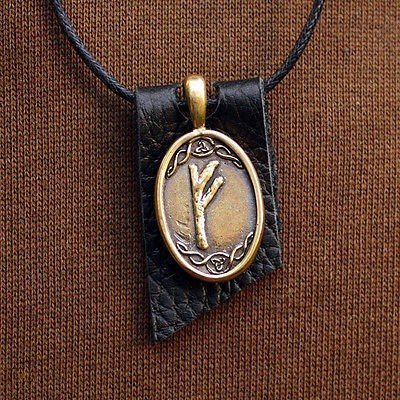
Runic Dreaming – Feoh

I have been thinking on the runes lately, sleeping with them, dreaming about them, carrying them round with me and the like. If you were to ask me why, my response would be almost entirely UPG – Because it felt like I needed to. It seems like a good way to attune myself to my Futhorc runes

It’s been years since I updated my blog so this is my first venture back into it for some time. Be gentle with me!

In keeping with the easiest way for people to get their head round each rune, I will start at the beginning with Feoh.


Feoh is pronounced FAY-och (As in a Scottish Loch). It is said to have the meaning of “movable wealth” like cattle used to represent. Historically if a household had cattle then they had access to milk, butter, cheese, beef, gelatine, horn, bone, leather/hide and manure, all of which were vital tools in bettering oneself or providing for the family and community. That is the very definition or wealth! The modern word would be “fee” as in the type of wealth used to pay a fee. My initial thoughts on this are that wealth ebbs and flows when we work, when we face significant challenges or when we capitalise on opportunities. The rune presents to me as being a representation of wealth that is due to be paid to others as well as wealth that is received in the form of a transaction, not an act of charity or gifting. It looks to me as if a person is stood in profile with their arms outstretched upwards in a gesture that could mean receipt or indeed dispensing of said wealth and gives the impression of movement which would be in keeping with the meaning of “movable wealth” associated with the rune.

We know from the Futhorc rune poem that it contains the warning that if you wish to gain honour in the sight of the “Lord” then it must be bestowed freely. I feel the “lord” mentioned in the rune poem is as likely to mean the “local lord” as much as it is inferred to mean the Christian God seeing as the rune poem was written long after conversion had taken place. That suggests to me that it is incumbent upon us all to ensure that we are not miserly or overly frugal with our wealth for the sake of hoarding it, otherwise we would be no better than the wyrms that jealously guard their treasure in the myths, legends, and folklore of old. We would not be afforded the respect and honour from within our local communities if we do not benefit them by sharing our wealth with them in some fashion, such as spending our money on community projects or within community businesses.

I perceive this differently to Gifu (X) which is for gifting more generally, as Feoh relates specifically to wealth, particularly that wealth which one would have ready access to, including perhaps cash, tangible assets or indeed knowledge and the earning of it when it comes to receipt. If it presents in a divination, it implies that wealth may be moving either towards, or indeed away from the querent! Consider the position of the rune when it is cast upon the cloth if that is your preferred practice. If it is closer to the middle of the cloth, which represents your spiritual centre, as it were, then it may be that there may be an opportunity forthcoming to earn some form of wealth (Be it monetary or otherwise, such as an asset/property or knowledge/power). The further the rune sits towards the edge of the cloth may infer the likelihood of wealth in some form moving away from you, or indeed a more remote opportunity that requires you to pay close attention to make use of! Interpretation can be a challenge here as we must remember that if presented then the rune is suggesting that you must also share something to benefit from its appearance in a reading. What that something could be may vary widely and thus requires active thought as time goes on to establish in your own mind whether the appearance of it in the reading has shown true for you.

Feoh therefore could represent any number of outcomes, such as an opportunity to earn respect by sharing your knowledge of a subject with a person or persons, or it could mean an opportunity to invest in property or a local community project is coming your way, and this could thus earn you a dividend on a physical or indeed spiritual level.

Consider then the position of any other runes that have been drawn or cast upon your cloth in relation specifically to Feoh. One rune drawn alone can make an interpretation of the meaning of it nearly impossible because of the vast possible meanings and nuances, at least without practice, contemplation on the runes and their individual meanings and then how they relate to one another during a reading.

On the subject of bindrunes, I have seen a few people reflect on preparing a talisman or charm to benefit a person seeking, for example, new employment by combining the Feoh with Beorc (ᛒ) or Wynn (ᚹ) which represent good, yet unexpected outcomes and joy/prosperity respectively. Bindrunes requires careful thought when creating them to ensure that the inadvertent presentation of any other runes in the process is welcomed and deliberate as they will have a bearing on the power and intent associated with the binding.

I’ll probably share some information in due course around rune-casting for the purposes of divination and augury, however I am still exploring this topic myself so I am considering a range of approaches before I settle on one which makes most sense to me. Remember, this is personal practice, and you should do what suits you best. I will talk through the process of how I approach it in a later post, hopefully!

Wassailing

Wassail! Wassail! All over the town,
Our toast is white and our ale it is brown;
Our bowl it is made of the white maple tree
With the wassailing bowl, we’ll drink to thee.

Here’s to our horse and to his right ear,
The gods send our master a happy new year:
A happy new year as e’er he did see,
With my wassailing bowl, I drink to thee.

So here is to Cherry and his right cheek,
Pray the gods send our master a good piece of beef
And a good piece of beef that may we all see
With the wassailing bowl, we’ll drink to thee.

Here’s to our mare, and to her right eye,
Gods send our mistress a good Yule pie;
A good Yule pie as e’er I did see
With my wassailing bowl I drink to thee

The Æcerbot Charm

The Æcerbot Charm is a Christianized version of a clearly pre-Christian traditional ritual of blessing for the fertility of fields. There is reference to a “holy keeper” which is perceived by Rosenberg (1966) to be Þunor which is not at odds with the heathen practice of using a hammer of Þunor or indeed invoking his name as a blessing to consecrate and bless. Herbert (1994) suggests that the plough is a symbolic penis; hence it is used to inseminate the ground with seed, thus is a possible reference to the importance of Ingui as a fertility god. Rosenberg also theorizes that the bread that is laid is symbolic of the “corn-baby” that was widely used across Europe. There are obvious links to other gods in the ritual that can be used in substitution by the modern Fyrnsidere to replace the Christianized form and I have included these in my own version of the charm following the original Old English version below.

I recognise that my own version of this ritual may not be to everyone’s taste, however it is a personal thing to me that I would consider if seeking a blessing with any planting I was looking to do in a field that seemed curiously afflicted with a poor ability to grow crops.

The original is below in Old English, followed by my own interpretation for modern use. I have not provided a direct translation as these are widely available on Google.

*****

Her ys seo bot, hu ðu meaht þine æceras betan gif hi nellaþ wel wexan oþþe þær hwilc ungedefe þing on gedon bið on dry oððe on lyblace. Genim þonne on niht, ær hyt dagige, feower tyrf on feower healfa þæs landes, and gemearca hu hy ær stodon. Nim þonne ele and hunig and beorman, and ælces feos meolc þe on þæm lande sy, and ælces treow – cynnes dæl þe on þæm lande sy gewexen, butan heardan beaman, and ælcre namcuþre wyrte dæl, butan glappan anon, and do þonne haligwæter ðær on, and drype þonne þriwa on þone staðol þara turfa, and cweþe ðonne ðas word:

Crescite, wexe, et multiplicamini and gemænigfealda, et replete, and gefylle, terre, þas eorðan. In nomine patris et filii et spiritus sancti sit benedicti. And Pater Noster swa oft swa þæt oðer.

And bere siþþan ða turf to circean, and mæssepreost asinge feower mæssan ofer þan turfon, and wende man þæt grene to ðan weofode, and siþþan gebringe man þa turf þær hi ær wæron ær sunnan setlgange. And hæbbe him gæworht of cwicbeame feower Cristes mælo and awrite on ælcon ende: Matheus and Marcus, Lucas and Iohannes. Lege þæt Cristes mæl on þone pyt neoþeweardne, cweðe ðonne:

Crux Matheus, crux Marcus, crux Lucas, crux sanctus Iohannes.

Nim ðonne þa turf and sete ðær ufon on and cweþe donne nigon siþon þas word, Crescite, and swa oft Pater Noster, and wende þe þonne eastweard, and onlut nigon siðon eadmodlice, and cweð þonne þas word:

Eastward ic stande, arena ic me bidde, bidde ic þone mæran domine, bidde ðone miclan drihten, bidde ic ðone haligan heofonrices weard, eorðan ic bidde and upheofon and ða soþan sancta Marian an heofones meaht and heahreced, þæt ic mote þis gealdor mid gife drihtnes, toðum ontynan þurh trumne geþanc, aweccan þas wæstmas us to woruldnytte, gefyllan þas foldan mid fæste geleafan, wlitigigan þas wancgturf, swa se witega cwæð þæt se hæfde are on eorþrice, se þe ælmyssan dælde domlice drihtnes þances.

Wende þe þonne III sunganges, astrece þonne on andlang and arim þær letanias and cweð þonne: Sanctus, sanctus, sanctus oþ ende. Sing þonne Bendicte aþenedon earmon and Magnificat and Pater Noster III, and bebeod hit Criste and sancta Marian and þære halgan rode to lofe and to weorþinga and to are þam þa þæt land age and eallon þam þe him underðeodde synt. Đonne þæt eall sie gedon þonne nime man, and gegaderie ealle his sulhgeteogo togædere; borige þonne on þam beame stor and finol and gehalgode sapan and gehalgod sealt. Nim þonne þæt sæd, sete on þæs sules bodig, cweð þonne:

Erce, Erce, Erce, eorþan modor, geunne þe se alwalda, ece drihten, æcera wexendra and wridendra, eacniendra and elniendra, sceafta scira, hersaewæstma and þæra bradan berewæstma, and þæra hwitan hwætewæstma, and ealra eorþan wæstma. Geunne him ece drihten and his halige, þe on heofonum synt, þæt hys yrþ si gefriþod wið ealra feonda gehwæne, and heo si geborgen wið ealra bealwa gehwylc, þara lyblaca geond land sawen. Nu ic bidde ðone waldend, se ðe ðas woruld gesceop, þæ ne sy nan to þæs cwidol wif ne to þæs cræftig man þæt awendan ne mæge word þus gecwedene.

Þonne man þa sulh forð drife and þa forman furh onsceote, cweð þonne:
Hal wes þu, folde, fira modor! Beo þu growende on godes fæþme, fodre gefylled firum to nytte.

Nim þonne ælces cynnes melo and abacæ man innwerdre handa bradnæ hlaf and gecned hine mid meolce and mid haligwætre and lecge under þa forman furh. Cweð þonne: Ful æcer fodres fira cinne, beorhtblowende, þu gebletsod weorþ þæs haligan noman þe ðas heofon gesceop and ðas eorþan þ we on lifiaþ; se god, se þas grundas geworhte, geunne us growende gife, Þæt us corna gehwylc cume to nytte. Cweð þonne III Crescite in nomine patris, sit benedicti. Amen and Pater Noster þriwa.

*****

Below is my own version of the ritual to fit with my personal Fyrnsidere praxis presented in Modern English:

Here is the remedy to a land that has been bewitched or fouled by unclean wīhta (Wights), malevolent entities or any untoward thing such that your crops do not grow as they should. On the night of the new moon, take four pieces of turf from four parts of the land and mark how they previously stood. Then, take oil (Rapeseed, sunflower) and honey and the milk of every animal which may be on that land, and a piece of wood from every kind of tree which is grown on the land, save sacred oak and beech, and a piece of every named plant, except only burdock, and then put Þunor-hallowed water sourced from the land onto them, and let it drip three times into the place of each piece of turf, saying these words:

“Grow and multiply and be filled, this earth. In the names of Ingui (Ing) and Nerþum (Nerthum) may it be blessed” Afterwards, carry the turfs to your wēofod (altar) and sing four blessings over those turfs to Ingui, to Nerþum, to Bēow (Bue) and to Frīg (Free), and let the green sides be turned towards the altar. Afterwards have the turfs brought to where they were before the setting of Sunne (Sun). And let Þunor (Thunor) have four signs of the hammer, made from rowan-wood with the Þorn (Thorn), Ear (Earth/Grave), Ēðel (Estate) and Ing (Ing) runes carved upon each. Let the hammers lie in the bottom of the pit and then say:

“Þorn, Ear, Ēðel, Ing” above each.
Then take the turfs and lay them above the hammers and say these words nine time above each: “Grow! Þunor-Corngrowere (Thunor-Corngrower) bless this ground.”

And then turn yourself to the east and raise your open palms skywards and say these words:

“Eastward I stand, favours I ask for myself
I ask the famed master, I ask the great Lord Ingui
I ask the great keeper of the honoured dead, Nerþum
I ask both below and above
And the true holy mother, Frīg
And the high hall of Wōden
So that with InguiĒowend’s (Virile Ing) permission this charm I may
Satisfy with thought turned towards firm purpose
Awaken the fruits of this land for our use in the world
Fill these fields with steadfast trust and faith
Make the this soil complete with earthly riches such that all may benefit”

Then turn yourself three times sunwise. Then stretch yourself out and recite the Rune Poem. Then make offering to Ingui-Ēowend, and to Bēow-Sulhhandla (Ploughman Bue) , and to Þunor-Corngrowere, and to Frīg-Eallmeaht (Almighty Free) and to Nerthum-Eorþan Modor (Nerthum Earth-Mother) and to the honour and grace of him who owns the land and all those who are dependent upon him. When all this has been done, then let an unknown seed be taken from the needy and then give to them twice as much as is taken from them. Have all the ploughing-gear brought out and put together. Have a hole bored on the plough-stick filled with incense and fennel and Þunor-hallowed soap and salt. Then take the seed, set it into the plough’s shaft and say:

“Erce, Erce, Erce, mother of earth
may the fertile one, the lord of the Ingaveones
grant fields growing and sprouting
increasing and strengthening
with shining shafts of bright crops
and the broad barley-crops
and the white wheat-crops
and all the crops of the earth.
Grant to him oh Lord Ingui
and all the blessed Gods
that this tilling be protected against any enemy
and it be victorious against any evil
of witchcraft and malevolence seen throughout the land.
Now I ask the ruler who shaped this world
that no woman be so word-strong nor man so clever
that he or she should be able to turn aside my words thus spoken”
When the plough is driven out and turns the first furrow, then say:
“Hale be thou, Nerþum, earth-mother!
Be thou growing in Ingui’s embrace
Filled with food for the use of men”
Then take each kind of meal (Flour made from the crops of the land) and bake a hand-sized loaf and knead it with milk and Þunor-hallowed water and lay it under the first furrow. Then say:

“A field full of food for the race of men bright-blooming may you become blessed in the name of the gods and this earth on which we live; the gods who made these lands grant growth to us as a gift so that each grain may come to us for our use.”
Then say three times: “Mighty Þunor-Corngrowere, let it be so blessed”.

*****

You will note that there are multiple gods and goddesses referred to throughout this piece. The following is offered in explanation:

Þunor: As previously mentioned at the beginning of the article, it was identified by Rosenberg in 1966 that the “Holy Keeper” referred to in the charm may relate to Þunor whose name was, and still is invoked as a means to consecrate, hallow and hold spaces and objects which were to be used for sacred purposes. I have used him for the purposes of blessing both within my hearth and without, therefore to me he remains a natural choice in his aspect as “Corngrowere/Corngrower” to essentially sanctify the land.

Ingui: Ingui in his aspect of “Ēowend/Virile” is called upon as a giver of life and as a literal “sower of seeds”, called upon to take an earthly role in impregnating the land with the seeds given by the needy/almsmen/beggars in the physical form of the plough itself, entering the earth with the act of sowing. He is the perfect choice for such a role, given his strong link to virility and fertility.

Nerþum: The Æcerbot charm refers directly to Nerþum in her role as Eorþan Modor/Earth Mother and the Earth in the Angle tradition of life and death is both womb and tomb, essentially. Given her strong role in the charm, I have referred to her by her known name whilst retaining the alternative reference to her as “Erce” which is within the original charm in Old English. To all intents and purposes, it is to her that we are pleading that the seed of Ingui will take hold for our benefit.

Bēow: As the Barley God concerned with the agrarian cycle, in my view such a pleading in this ritual would also need to include some reference to him for he lives and dies each year with the cycle and we are asking him to come forth in this aspect and grow to his fullest potential. He is also known as the Sulhhandla /Ploughman and would be concerned with such when seeking to turn around the fortune of a blighted field.

Wōden & Frīg: Perhaps the more contentious of the God’s/Goddesses I have included in my version of the charm. I have referred to them because the literal translation from the Old English refers to the “true holy mother” and the “high hall” which, it could be argued, relate to Frīg in her aspect as mother-figure to mankind, and Wōden in his aspect as All Father. Wōden could be appealed to here in several aspects – Wordsāwere/Wordsower as a means to enforcing the strength of the charms words, Lǣce/Healer to appeal to him as a healer of the land, or even Wēstend/Destroyer in his aspect as a Desolater to destroy the presence of that which has seemingly cursed the land. To that end, I have used his name in the general form without being specific.

With regards to the moon cycle I have chosen for the selecting of the turfs, this is so that the ritual is completed on the day following the night of the new moon as it has all the connotations and associations with new beginnings and new efforts that appealed to my common sense.

The runes are referred to twice in my version, as in the Old English version it recounts having crosses made of ash and marked with the names of Matthew, Mark, Luke and John, therefore I have selected four runes from the Futhorc that I would etch upon hammers made from rowan-wood – runes that I felt lent themselves nicely to the spirit of the ritual though you could justify the use of many other runes in their stead should you so wish. The recitation of the Rune Poem replaces the litanies referred to in the Old English version.

And finally, the “water taken from the land” is an extrapolation of mine away from the “holy water” concept in the original, because I feel that water as a purifying and liminal agent used frequently in hearth praxis, should be taken from the land on which one resides. I find this an important concept as the water is already associated with the land and ties in nicely with the plants, wood and turfs that have been sourced already. This should be hallowed by Þunor also if it is to be in keeping with the original ritual.
Hægtessan & Burgrune

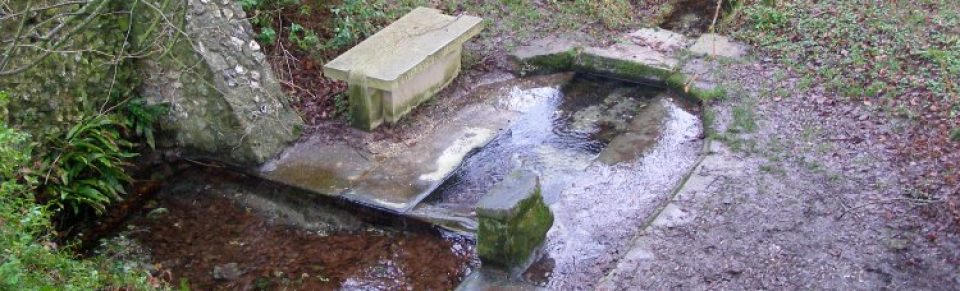
Taken as a gloss for “witch”, the word has uncertain origin and has also been strongly associated with “Hag” or “Crone”, however the Old High German cognate, hagusizze has the meaning of “border/hedge-sitter” and may specifically relate to a class of females who would literally sit upon the border or boundaries of sanctuaries such that they straddled them and received power and knowledge from being dwellers of both the profane and the sacred.

These women were also associated with some of the characteristics of Wælcyrigean in sharing their raw and bloody power. The term “Hægtesse” is referred to in the Lacnunga charm, Wið Færstice as a specific group associated with other beings of the Otherworld (Namely, the gods and elves) therefore these women may well have been supernatural in origin, considered to be powerful, almost deific in origin and certainly to be feared by mere mortals, yet possessed of extraordinary insight and knowledge.

Both Bede and Coifi refer to heathen temples in similar fashion indicating the importance of boundaries when setting aside the sacred from the profane:

ða wīgbed ond þa hergas þara deofogilda mid heora hegum”

“…the altars and the harrows of the temples with their boundaries” (Coifi c.627 AD)

“…aras et fana iodlorum cum septis quibus erant cirumdata”

“…the altars and temples of the idols, with the fences by which they were surrounded” (Bede 731 AD)

The fact that Bede remarked on the boundaries of the sanctuaries implies that these were significant and has allowed us to draw the conclusion that some form of emphatic boundary would be necessary to designate the point at which the worshipper crossed from the profane to the sacred space.

The significance of sitting on a boundary is that it is a liminal space, open to influences from both sides and thus important in the heathen worldview. We know from evidence that those who worked magic or sought information from the Otherworld were in the habit of sitting on a barrow mound in Norse traditions and that this was known to the Anglo-Saxons similarly “sittan sundor æt rune” or “sit apart in secret thought”.

The Hægtessan are remembered in the place-names of England, such as Hascombe (Surrey ) and Hescombe (Somerset) meaning, literally “Witch Valley”.

A Burgrune has similar meaning, specifically “female skilled in mysteries of the high place” and is also glossed from the Latin “parcas” meaning “fates” which ties in well with practices of divination in high places on platforms raised above the surrounding land, such as seiðr rites. The term may have some reflection upon tales such as Rapunzel and the Germanic seeress Veleda who performed her prophetic magic in a high tower. The boundaries that would be straddled in this example may be between earth and sky as profane and sacred places, set apart from more traditional sanctuaries.

A Hægrune means “one of the boundary who is skilled in mysteries” and is one of a group of terms associated with female supernatural or magical figures, also including Leodrune “one skilled in mysteries within the tribe” or Helrune meaning “one skilled in the mysteries of the world of the dead” and could therefore reflect a more shamanic leaning, involving the Otherworld in journeys and necromancy.

Of particular interest is that these roles appear entirely associated with powerful female supernatural beings with extraordinary powers and magical abilities. There appears to be no male cognate and thus the domain of prophecy, divination and mystery seems to be exclusively female. The one notable exception to this is that of Wōden himself, whose use of magic to divine information and wisdom seems to be unique in terms of male deities that are known within the Anglo-Saxon pantheon.

My Hearth Ritual Praxis

Establishing ritual hearth praxis is the single most important exercise that we Frīfolc can take religiously.

My house, my home is my sacred enclosure, my entire cosmos and the very centre of my life. To all intents and purposes, I am our household Þingere, or familial priest, charged with the responsibility of directly engaging with divinity and our ancestors alike. As such I am responsible for establishing and maintaining those connections with fervour and respect.

There has been a drive of late amongst fellow members of the Frīfolc to share their ritual hearth practice, something which had previously eluded newcomers when seeking to establish a “how to” guide to forming some kind of standard. My ritual, like that of the Lārhūs Fyrnsida is placed within the context of the tradition of Fyrnsidu and is broadly similar to that format with very minor differences. I recommend their article on the subject if you are interested in the why as well as the how.

The tradition of household practice holds that the domicile is a sacred enclosure, but there are sites which are specifically given over to the proper veneration of household deities and divine ancestors. This place is the “Weōfod” (Pronounced “Way-oh-vod”, meaning altar), and is the personal altar of my family. Some refer to this as a wīgbed, which is a term often used to describe a hearth altar, specifically. Whilst my altar represents my hearth, it is not placed physically at my hearth, therefore I prefer to use the term weōfod, which is perhaps slightly more general in meaning.

My preference would be for this to be set within the home, either near to the hearth itself, or in some quiet and contemplative place within the home that can be satisfactorily used as a sacred space. This can be difficult. In my own home, I am the sole practitioner of Fyrnsidu and my wife is not supportive of my weōfod being kept within the confines of the house proper, therefore mine is maintained in our garage at the bottom of our small garden. It is out of the way, but it is private and thus not liable to being disturbed.

My weōfod is upon a shelf mounted on to the wall. It is small, comprising of a single shelf along the rear wall, near to the corner. Corners are associated with liminality, a meeting of two points suggestive of an area between Middangeard and the divine reality of the Gods. Most importantly, this space has been given over to the gods and is not used to store or maintain other goods or profane objects which are not intended for ritual. I keep it clean and free from extraneous material.

The practice of home worship within the hearth can be as complex, or as simple, as the household wishes it to be. I tend to keep mine simple and heartfelt, rather than overly elaborate. My own praxis has developed and will continue to develop over time. This includes the various tools which are used within the hearth cult on the weōfod.

However, the basic tools of the heathen hearth cult should be considered as follows:

Clǣnsungfȳr (Cleansing Fire): I have no statuary items, no idols upon my altar. I feel very strongly that such would need to be personally crafted in order to be charged with meaning for my own hearth, and at present I have not learnt the required skills to create these in a manner that would do me and the Gods justice. Until then, I use a votive candle to represent the requirement of the sacred flame. It is lit on the weōfod during ritual. Not only does it provide the representation of the traditional sacred flame, but it is also useful in the establishment of sacred space through circumambulation, reenacting the sacred cosmogony to delineate the space of the other for ritual.

Offrungdisc (Offering Bowl): This is a small bowl that I use as the receptacle to store offered food or other offerings. This enables me to share offerings directly from meals to the ancestors and the Gods. I also use a hand-crafted goblet for the offering of libation, which is my usual preferred method as I like to offer mead where possible. Sometimes other offerings are more representative or appropriate, such as seasonal foods, petals during Blōstmfrēols or Ēostre, sprigs of holly at Yule and the like.

Rēcelsfæt (Incense Burner): I have no incense burner as such, but I do select various plants from our garden that give off aromas that I will burn during ritual. I find that incense allows you to engage another of your senses in the ritual, opening all of your senses to what is happening and thus fully committing yourself to the process.

These items are considered to be the bare minimum of materials required for enacting cult ritual in the hearth. I have added to this with a representation of my ancestors in the form of a bronze figurine that belonged to my grandmother, as well as futhorc runes that I associate with the specific Gods that I tend to entreat. I am keen to replace these with my own hand-carved ones as and when I can perfect that process.

My Ritual Format

One is encouraged to kneel when addressing the divine, although not if this places the weōfod out of practical reach. For me, this would be the case and so I stand before my weōfod in the position of the Eolh rune: ᛉ

I stand with my palms facing upwards and I feel this shows that I come before the Gods and my ancestors unarmed and open. I do not cover my head, however some choose to do so as it is not uncommon in polytheistic religions to do this.

Clǣnsung (Purification/Cleansing): Prior to communion, I perform a rite of purification on myself in preparation of speaking directly to the divine. For me, this is a simple washing of the hands and face, or perhaps a bath or shower. In Fyrnsidu, water plays a key role in liminality and as such cleansing oneself with water is an ideal way of preparing for petitioning communion.

Hālgung (Hallowing): I then begin the ritual hallowing of my weōfod. As previously mentioned, I do this via demarcation with fire in a sunwise direction by using my candle in a circular motion over the weōfod. I do this 3 times as 3 is an important number in Germanic cosmology. I personally choose to invoke Þunor-Hālgunghealdend (Hallowing Protector) at this time as he is associated with hallowing sacred spaces.

Forespræc (Preface): Once ritual purification and demarcation of space has been completed, I then address the deities who are invited to witness the sacrifice. The steps are as follows:

  • I petition Nerþum-Þerscoldweard (Nerþum Threshold Guardian), to allow divine communion to occur. In order to do this, I take a pinch of earth from the grounds of my home to signal my personal link to the land and thus to Nerþuz
  • I offer Rēcels (Incense) to Nerþum-Þerscoldweard alongside prayers and further supplications.
  • I make a petition to Frīg-Heorþmodor (Frīg Hearthmother), to deliver the offerings to the ritual’s intended recipients. She is significant in this regard as she is a deity of the hearth itself, therefore strongly linked to my family.
  • I then give prayer and offerings to Frīg-Heorþmodor (further incense, a libation poured, grain burned etc.) as thanks for her role in the rite.

Hālsung (Entreaty): The hālsung constitutes the body of the ritual.

  • I recite a prayer directed to the deity who is being honoured. This prayer follows a similar format to that espoused by the Lārhūs Fyrnsida.
  • I then state the reason for the offering and what goods will be offered.
  • Then, on occasion but not always, I may entreat the deity to return a gift in return for a gift (the offering).

Gifu (The Gift): Once the hālsung is completed, I then give the intended offerings to the deity/deities.

Endespæc (End Speech): After the offering has been given, closing statements can be made, thanking and appreciating the deities invoked, always finishing with the line “And hail to Nerþum, that gives to all men”. Nerþum-Þerscoldweard is once again petitioned to close the gates, thereby ending the ritual.