• Wīlcume
  • Fundamentals
    • What is Fyrnsidu?
    • Ancestral Worship
    • Wyrd
    • Friþ / Frið
    • Prayer
    • Ritual
  • Deities
    • Wīhta
      • Boggart
      • Eotenas
      • Dweorgas
      • Hægtessan and Burgrune
      • Ielfe
      • Orcneas
      • Scuccan
      • Scinan
      • Þyrse
      • Wælcyrigean
    • Bēow
    • Ēostre
    • Frīg
    • Helið
    • Hengest and Horsa
    • Ingui
    • The Mōdru
    • Mōna
    • Nerþum
    • Sunne
    • Tīw
    • Þunor
    • Wada
    • Wōden
  • Blog
  • Myths & Legends
    • Wōden & The Mead of Poetry
    • Helið and the Þyrs of Cerne
    • Ode to Ingui
  • The Reckoning of Time
    • Calendar 2026-27
  • The Fuþorc
    • The Rune Poem
  • Key Sources
    • The Æcerbot Charm
    • The First Merseburg Incantation
    • The Second Merseburg Incantation
    • The Wið Cyrnel Charm
    • The Wið Dweorh Charm
    • The Wið Færstice Charm
    • The Wið Ymbe Charm
    • The Nine Herbs Charm – Lacnunga Manuscript
  • Contact

The Silver Well Hearth

~ A Fyrnsidere Journey Through Life

The Silver Well Hearth

Category Archives: Uncategorized

Ielfe

29 Tuesday Aug 2017

Posted by Hrēodbēorht Bātweard in Uncategorized

≈ Leave a comment

Elves are commonly referred to throughout Old English and Old Norse myths and legends. They are often inferred to be negative beings of numinous origin. Indeed, the Norse believed them to be descended from the Vanir, a family of deities that is not referred to by that name in Anglo-Saxon custom. For beings that are feared and respected in equal measure, it is perhaps surprising that many Anglo-Saxon children were given elf-based names such as Ælfmær, Ælfræd, Ælfric and Ælthryth. There is some disparity between the Anglo-Saxon and Norse traditions concerning elves but the relation to the gods is an idea they do share.

Elves, like dweorgas (dwarfs) are associated in Old English tradition with causing illness or harm and Beowulf lumps them in with other anthromorphic beings as follows: (1.112) “eotenas ond ylfe ond orcneas”, therefore with ettins/giants and orcs which are similarly considered to be negative entities. The passage in full reads:

From there all monsters arose –

Etinns and elves and orcneas

Likewise the giants who strove against god

For a long time – he gave them their reward for that

In Scandinavia, they have an Álfablót or “elf-blessing” as a custom which appears to be intended to secure the blessings of the elves. Evidence from the sagas indicate this involved the sacrificing of a bull, reddening the outside of the dwelling of the elves with the blood and making an offering of the meat. Elf-dwellings may have been considered to be what we now refer to as barrows, thus indicating an association between elves and the dead.

Elf is a sort-of parent species from which we have such off-shoots as Woodland Elves (Wuduelfen), Mountain Elves (Dunælfen), naids, dryads and from the Lacnunga Manuscript we have a specific reference to Water Elves (Wæterælfen). Land wights are also linked to Elves in that they were considered to be powerful natural beings whose goodwill was necessary for the well-being of society as a whole.

In a study by Hall, he found that elves were originally a class of powerful male-gender beings associated with the gods who could harm humans through provoking illness, connected with transgressive behaviour and its consequences – I.E. those behaviours of moral or social violations. Consequently, they can be viewed as a means of maintaining and upholding moral and social values. Sometimes transgression could bring benefits, however, to spirit-healers and the like and the Ielfe were thus connected to hallucinogenic substances, sudden pains, prophetic speech and trances.

In Britain today, you will still commonly find flint arrowheads in and around sights of historic significance where man has known to have lived for thousands of years. This are associated with Neolithic or Bronze Age hunters but are often referred to as “Elf-shot” and believed to be physical evidence of the psychic attack of an Elf as per the “lytel spear” or little spear of the Wið Færstice charm when it was “shot into” the body of a person and thus causing a malady.

Old Norse Seiðr, or Old English Ælfsiden is a form of divination associated in name with Elves and translates as “Nightmare or magical apparition”.

Whether friendly or nefarious, elves were considered dangerous as men could not expect to deal with them on equal terms. This placed them as potentially on the same side as hostile forces. Indeed, by early mediaeval times they were also linked to succubi, female elf-beings of astounding beauty that would tempt men in order to extract their seed for fiendish reasons known only to themselves. Elf-fair or “Ælfscienu” particularly relates to these dangerous beings and indicated an otherworldly beauty.

Despite their sometimes negative associations, Elves are said to be fair to look at and thus not “monstrous” in their countenance. This leads many to feel that they were not automatically deserving of aggression or hatred, and instead should be respected and mollified. Yet they were not said to be necessarily friendly with men, and therefore for some they became worthy of worship and engagement in terms of sacrifice and gifting.

Welund the Smith is said to have been a prince of the elves and is associated with metalworking; something that would later become linked to dweorgas as opposed to elves. In modern fiction, this is perhaps represented well by JRR Tolkien where he presents both the dwarfs and the elves of Middle Earth as being exceptional smiths with wildly differing conceptions of weapon and armour smithing and the qualities those items should expound.

Elves are also intrinsically linked to the Norse god Freyr (Ingui / Ingui Frēa) who is said to be Lord of the Elves and thus connected with both fertility and death.

Elves are characterised as being either invisible or extremely difficult to see, characterised in Anglo-Saxon art as the Nordendorf motif where the face of the elf is not shown clearly but must be pieced together from the form presented, thus explaining the sudden sighting of a face in bark, or in stone formations or glimpsed in the water of a running river. These faces can also often be found woven into metalwork on swords, scabbards and jewellery.

In short, “Ælfe” is a catch-all term for beings of the Other, that are powerful, natural entities linked with death, illness and protection. Elusive and yet sometimes seductive, they are not to be dealt with lightly. The protection they can offer may come at a severe price, though for many they will consider this a price worth paying. Respect, deference and propitiation coupled with honest intent may well be the order of the day, for those of us not seeking confrontation with these powerful entities.

(Adapted from the entry on Ilfe by Pollington, “The Elder Gods – The Otherworld of Early England”)
Se Hræfngod

24 Thursday Aug 2017

Posted by Hrēodbēorht Bātweard in Uncategorized

≈ Leave a comment

5-hugin

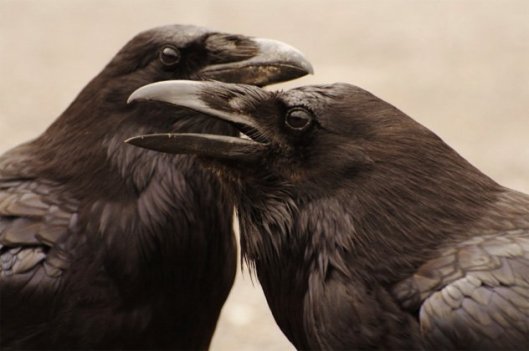
A distinct black shape, tumbling in the updrafts of a mountain crag – a raven at play. The ‘gronking’ call of a raven is one of the most evocative sounds of Britain’s uplands. The raven is probably the world’s most intelligent and playful bird. In the world of myth, it is a bird of paradox, and something of a dark clown. Its association with playful intelligence is perhaps exceeded by its image as a bird of death. Its harsh call, and its presence in remote wild places and at scenes of death, has earned it a reputation as a bird of ill-omen. After all, the old collective noun for a group of ravens is an ‘unkindness’. Yet there is so much more to the raven.

An old Scottish name for the raven is ‘corbie’, which is thought to have been derived from the Latin ‘corvus’. One Scottish legend reflects the dark beliefs about this bird. It tells of an evil hag called Cailleach who appeared in the form of a number of birds, including the raven, and feasted on men’s bodies.

This large crow appears again and again in Celtic lore. In Welsh folklore, Bran the Blessed (Bran is Welsh for raven) is a kind of primordial deity and guardian of Britain whose totem is a raven. Bran ordered for his own head to be cut off, after which it could still speak words of prophecy. Eventually it was said to have been buried beneath Tower Hill, at the Tower of London. The presence of ravens at the Tower is an echo of this legend and the prophecy says that if the ravens ever leave the tower, Britain will fall (hence their wings are clipped, just in case!). Interestingly this Welsh word appears in Scotland, and Strath Bran, in the north translates as ‘Strath’ or Valley of the Raven. They are still present there today.

Arthur, another legendary guardian of Britain, is also associated with ravens. In Cornwall, which is also steeped in Celtic lore, it was believed that Arthur didn’t really die, but was magically transformed into this bird.

The Celts were a warlike people, and the presence of ravens on the battlefield would have been very familiar to them. The Irish goddess, Morrighan, had a number of different guises. In her aspect as bloodthirsty goddess of war, she was thought to be present on the battlefield in the form of a raven.

Odin (Wōden), the chief of the Norse gods, was accompanied by a pair of ravens, Hugin (thought) and Munin (memory/mind), who would fly far and wide to bring news to Odin. One of Odin’s names, Hrafnagud, means the ‘Raven God’. I refer to these two spiritual raven companions to Wōden as Þōht (thought) and Gemynd (memory/mind).

In the Old Testament, the raven is the first bird Noah sent to look for land, and Elijah is described as being provided for by ravens. They are used as a symbol of God’s providence in both the New Testament and in Christian art.

Our hunter-gatherer ancestors would have observed the keen intelligence of this bird. It has a well-documented habit of deliberately revealing the whereabouts of deer, so that wolves can find their quarry, and leave spoils, which the ravens could eat. Even some modern deer-stalkers report that ravens will help them to locate deer, as the birds know that they will receive the ‘gralloch’ or guts after the deer is killed. However, there was apparently a belief among some stalkers that three ravens was a bad omen.

The indigenous people of the Pacific Northwest of North America were well aware of the raven’s multifaceted nature, and Raven was revered as a major deity and something of a trickster. He features frequently in the distinctive artwork of these people.

There is probably more folklore concerning the raven than any other bird in Britain. While some of this is somewhat sinister, the more we get to know this playful and intelligent bird, the more respect we might realise it deserves. To make an offering to a raven, even in passing, is to show these fascinating birds that you are open to their interaction. Ravens can and have been tamed, even learning to speak words of human speech and to use tools to reach food.

Thought and Mind/Memory are often considered to be one and the same. Indeed the word Gemynd means both “memory” and also “thought” and gave rise to the modern English word “mind”, however there is a distinction between the two that offers a unique perspective on understanding the riddle posed by the Poetic Edda sonnet, Grímnismál which reads as follows:

(From 1866 Benjamin Thorpe in Edda Sæmundar Hinns Frôða “The Lay of Grimnir” 1883 Gudbrand Vigfusson in Corpus Poeticum Boreale “The Sayings of the Hooded One”)

20 Hugin and Munin fly each day over the spacious earth. I fear for Hugin, that he come not back, yet more anxious am I for Munin

In this translation (And in many others), Odin talks of fearing for Hugin (thought) and yet is more anxious for the return of Munin (memory/mind). Thought and Mind are clearly therefore different concepts and some have linked these to shamanism. I am not a shaman and have no knowledge or understanding of the full shamanic process, however some do ascribe shamanistic features to Wōden in that he seeks knowledge all over the world and may arguably use shamanic practices in order to achieve this on some level.

Most people only ever use “Thought” to get them through life. They think about something (Even if only for a split second, unless acting entirely on instinct), and then they act. This may be because generally modern man is not even aware of the existence of “Mind” as they think that “Mind” and “Thought” are one and the same. Mysticism, amongst other practices has taught us, however, that the mind clear of all thought is in fact the greatest steer for us through life and is best able to give us true sight, much further through relative time and space than “thought” will ever carry us. One of the prime rules of meditation is to try and empty your mind of thought – to send “Thought” out and then you will allow “Mind” to be free also. From that moment on the calmness that inhabits us and the sudden greater awareness that many describe from the process can only really explain the sheer amazing possibility of using one’s mind over using one’s thoughts.

Mind is also known as Memory and this is a key concept in heathenry and particularly to the Fyrnsidere when considering the principles of remembrance and ancestral worship and how that ties in so strongly to hearth practice. The raven is therefore a hugely symbolic bird and one that I revere. These beautiful birds deserve our consideration and thanks whenever the opportunity arises.

It is perhaps understandable, therefore, that Wōden is more concerned about the return of Mind than he is of Thought, because he knows that Mind is more likely to find you the successful way through life itself and is therefore to be considered of greater importance overall.

Food for Thought… Or is that Mind?


(N.B. Some of this article is directly quoted from TreesForLife.org.uk)

Hærfest Part 2

08 Tuesday Aug 2017

Posted by Hrēodbēorht Bātweard in Uncategorized

≈ Leave a comment

Somewhat predictably in my last blog post I completely failed to mention one of the largest parts of my Hærfest celebrations, namely the offerings and gratitude expressed towards my ancestors during a separate ritual. I find it is important to reserve one ritual for my ancestors and one for the gods, because the reasons for contact and ritual are entirely different. I tend to conduct rituals to my ancestors on a far more frequent basis than I do the gods for reasons outlined in my Ancestral Worship post.

Needless to say, my previous post appeared to suggest I was conducting a ritual solely for the gods and nothing could be further from the truth!


Hærfest

05 Saturday Aug 2017

Posted by Hrēodbēorht Bātweard in Uncategorized

≈ Leave a comment

Wesaþ ġē hale!

It has been a little while now since my last update. Midsumor has come and gone and we are now well into Þriliða with Mōna reaching his height in just a few days time whereupon I will celebrate Hærfest by breaking bread and offering the first fruits of the season. This celebration is for the start of the Harvest season which will run through until the first Winter full moon (Winterfylleð) in October. Many celebrate Hærfest on the 1st of August but for me, that makes little sense as the luni-solar calendar doesn’t allow for this, therefore I am content to make my offerings and celebrate on the full moon of Þriliða this year, being the first full moon after the start of August. All of my ritual practice follows the full moon with the obvious exceptions of Yule and Midsumor. Next year, the Hærfest full moon will be on 26th August and falls within the month of Weodmōnað and therefore my personal ritual and celebration will be aligned to that date accordingly.

The offering will be made to Bēowa, the God of the agrarian cycle and who has long been associated with farming from the start to the very end of the cycle. He is held dear by many associated with brewing and farming for obvious reasons. I myself have wanted to brew my own mead for some time but have yet to be afforded the time for the pursuit. I am now a father of two and my responsibilities to home and hearth outweigh my personal desire to tinker and experiment with homebrewing! I certainly will look into attempting such in the future, however. For now, I must content myself with acquiring my mead from the local supermarket and pray that the Gods see no slight in this when it is offered to them.

Bēowa will be offered bread, beer and seasonal fruits by me. Whilst the physical fruits of the season should be presented in gratitude, it is also a time to reflect on the fruits of our labours in other pursuits. In this modern world, productivity is no longer measured in simply what is grown from the soil, but also what is grown within our hearts and hearths. I will take a moment in ritual to reflect upon my achievements this year, I.E. the sowing of the seeds I have planted in a very literal sense. I have become a father again and I have also achieved an examination pass which will allow me to pursue promotion in the coming years, both things for which I am extremely grateful. I will be taking the time to thank Ingui for blessing me with virility, Frīg for the health and wellbeing of my children and hearth, Wōden for the inspiration to expand my knowledge and wisdom in achieving my exam pass, Nerþum for keeping me grounded and grateful, and Tīw for inspiring me to fight against injustice and chaos within my societal Innangeard.

The year ahead will also be considered as my options and opportunities reveal themselves slowly but surely. Frīg will therefore also be consulted as the all-knowing Wyrdwebbe (Wyrd Weaver) as I make my desire known and state my intention clearly before the Gods. Wyrd favours the bold and the mead will clearly be in full flow for this Hærfest celebration!

May you keep frið within your own hearths this Hærfest and give thanks for all you have achieved and continued to achieve.

Ode to Ingui

01 Saturday Jul 2017

Posted by Hrēodbēorht Bātweard in Uncategorized

≈ Leave a comment

Rode he by me in his waggon of gold
His hair whipped by the prevailing wind
A greater sight has never been foretold
That great might ‘neath his alabaster skin

We followed him then o’er the great sea
And steadily did our fortunes then grow
Oft did we sacrifice to our Lord Ingui
And then field after field we did sow

As children were born unto this land
Our cups did we raise in his name
He held our tribe close in his hands
And lords of all England we became

Lost to the flow of Wyrd are his many deeds
That to our great shame are forgotten
Yet mighty things may grow from a tiny seed
To be sown in our fair children begotten

Those of us who recall shall exalt him still
And give thanks for seasons of fair weather
His waggon tracks still lead o’er England’s hills
And his name shall be honoured forever

*

I dedicate this poem to Lord Ingui, may his name continue to be honoured.

Midsumor

01 Saturday Jul 2017

Posted by Hrēodbēorht Bātweard in Uncategorized

≈ Leave a comment

Midsumor.

It is a word that has become deeply ingrained in the national psyche and yet appears at odds with modern accepted practice in terms of the changing of the seasons. These days, Midsummer actually signifies the beginning of the summer months, whereas back in the so-called dark ages, it is posited that only two seasons were acknowledged, namely Summer and Winter. As has been mentioned on other blogs, the Anglo-Saxon calendar was Luni-solar in as much as each Mōnað (Month) was governed by the phases of the moon, yet arguably the two most significant holy tides, Liða and Gēol (Midsummer and Yule respectively) fell on the two solstice days of the year, thus keeping everything “on track” as exact points of reference. Thus Midsummer fell in the middle of Summer and Yule in the middle of winter. Autumn and Spring were not specifically observed on their Equinoxes and today, many heathens, particularly Fyrnsidere, observe the changing of those seasons as part of the Winterfylleð (Winter full moon) and Wintersdēað (Easter) celebrations, being the first full moons after the equinoxes.

Midsumor is a time to celebrate the massive power of Sunne as she continues to pull her flaming chariot across the sky for the longest period of time in the year. She drives out the darkness for longer than any other day in the year, giving rise to the “longest day” which is celebrated as being the very height of her power. Consequently, we celebrate this in ritual format on the Summer Solstice.

As my praxis is entirely hearth-centric, and solitary, my rituals are both personal and perhaps somewhat solemn. The celebration of Midsumor evokes visions of people gathering in large numbers, singing, holding hands, basking in the warm glow of Sunne and then lighting a large fire in solidarity with that mighty Goddess, casting their offerings into the flames and proclaiming their deep gratitude for the light and warmth that She brings to our hearts and souls. As a solitary practitioner, such a celebration is far more muted in comparison, however I present it below from memory so as to assist any others who are in a similar position but seeking some sort of steer about what to do.

I began my ritual by cleansing myself and then my weōfod (altar). For me this involves a simple process of washing my hands and face with warm water only. As discussed previously, water is a liminal substance that is of major importance to the Fyrnsidere. It helps us to connect with the numinous.

For the cleansing of the weōfod I light a candle and passed the flame three times Sunwise around my weōfod, calling to Þunor to hallow the space and make it sacred. Whilst my weōfod is already dedicated to the Gods and Goddesses, this ritual cleansing helps me to not only ground myself but to set the tone for the use of the weōfod and reinforce the use of it as a sacred space.

My weōfod is situated in our garage on a shelf midway up the wall. To remain in contact with the weōfod for ritual purposes, I therefore remain standing as opposed to kneeling which is perhaps more standard practice.

I then called to Nerþum as a liminal deity to allow me communion with the divine. To me, Nerþum acts as a gatekeeper between Middangeard and the other worlds and represents a threshold between worlds. Wada is often used as a deity for this function also, particularly when water is used at the weōfod. I am comfortable using water or soil from my homestead for this function. If using water, my preference is to use rainwater or standing water from within the garden or grounds of my homestead so that the element used is within my personal control and thus more relevant to the ritual coming from within my Innangeard. Whilst petitioning to Nerþum to allow me communion, I place the soil upon a small dish on the wīgbed, ensuring I am touching the soil whilst doing so.

Some light incense at this stage whilst making further prayers or supplications, however I use herbs growing in my garden, rubbing these between my palms to evoke a strong scent as incense sticks are not practical in my garage. I prayed to Nerþum at this point, calling to Her as Eorþan Modor to thank Her for the fertility of my gardens and the produce She has given not only to my heorþ but to the animals and insects that frequent it. She is a deity of life, as well as death and thus I also give thanks to Her for receiving the dead leaves, animals, plants and insects within the boundary of my heorþ, thus ensuring the continuing life-death-rebirth cycle.

My intention for the Midsomer ritual was to make offering to Sunne but also to Ingui, who I had previously petitioned and made offering to when my wife and I were seeking pregnancy at the end of last year. We had just been blessed with the birth of my second daughter and thus it was important to me to show my gratitude to Ingui by making Him a further offering, and to Sunne for blessing us with warmth and light during the period following my daughter’s birth. To enable these offerings to pass to Ingui and Sunne, I petitioned Frīg as Heorþmodor to ferry the offerings to Ingui and to Sunne. Frīg is a protector of children as another aspect of Her many functions and therefore this seemed particularly appropriate to me for the ritual. I also prayed to Her in gratitude for the health and wellbeing of my children whilst again crushing herbs in my palms, the scent an offering of supplication to Her.

I then recited a prayer to Ingui and then to Sunne. These I do not prepare ahead of time, though many do. I speak from the heart, clearly and with feeling. I say who I am and who they are to me, what they mean to me and express my gratitude to them and why I am making them an offering. I petitioned Sunne to continue to light the darkness in my life and to help me see clearly the threats to my heorþ and to my folc. To Ingui I petitioned Him to help me connect with my ancestors and to draw upon their strength in supporting my heorþ.

To Ingui I then made an offering of mead and to Sunne I made an offering of a dedicated candle to burn through the darkness in solidarity with Her as the days will now begin to draw in. I was careful to ensure the candle was not unattended for safety reasons.

I then thanked both Sunne and Ingui for hearing my petitions, Frīg for conveying my gits and I then called once more to Nerþum to close the gates to the numinous, thus ending the ritual.

I would recommend to anyone looking to create their own rituals to take a good look at the Lārhūs Fyrnsida website which has an excellent article on Ritual Format which I will link here.

Site Updates

17 Monday Apr 2017

Posted by Hrēodbēorht Bātweard in Uncategorized

≈ Leave a comment

Wesaþ ġē hale!

I have been busy populating some of the pages of this blog with Fundamentals, Deities, and the Anglo-Saxon Heathen Calendar. I will write more about my own Hearth praxis in the coming days and weeks but just wanted to put this short post up to prove I wasn’t doing nothing at all! I have credited where it is due and a lot of my information comes from the indomitable Lārhūs Fyrnsida website. I have provided a detailed section on the Goddess Helið that some may find of interest or use. I would welcome any comments on any section and look forward to writing more soon.

You may notice that there are some leaps of faith or “UPG” which stands for “Unconfirmed Personal Gnosis” that may not be to some peoples tastes, however in a world where the unknown outweighs the amount known, such things are, in my submission, acceptable if they can be suitably justified. I am more than happy to discuss these further with anyone who disputes them or feels they challenge common sense.


Helið and the Þyrs of Cerne

03 Monday Apr 2017

Posted by Hrēodbēorht Bātweard in Uncategorized

≈ Leave a comment

Tags

Þyrs, Cerne, God, Goddess, Legend, Myth

The people of Cerne were a hardy folk, well used to surviving amongst the chalk hills of the Cerne valley that rose up from the river of the same name. They grazed their cattle and sheep upon the land and they showed their gratitude to the gods with their sacrifices and offerings in keeping with tradition. There rose, within Cerne, a well-spring from deep under the chalk hills, known to the locals as the Seolfor Cwylla and it carried with it fresh water that it was said could cure the ills of the local folk and could be depended upon to water the fields and provide sufficient refreshment for the cattle so that the people of Cerne would continue to thrive when the skies ran dry during the Summer months.

There lived nearby a crone, bent and twisted with age and she took a copse of trees for her home high in the hills above Cerne. She was said to be a gyden who had lived in the hills for longer than man could remember, tending to the wild places and keeping them free from maleficent wihta and outlaws. She was said to be very wise and knowledgeable in the ways of healing worts and their applications. The folk of Cerne named her as Helið and took her for a goddess of their own. They would leave their offerings to her at the site of where the Seolfor Cwylla reached the surface, and merchants would throw pieces of silver downstream to pay their respects to Helið as their wares were pulled from one marketplace to another throughout the Frome Valley of Dorset and beyond.

Cerne was a place of peace and plenty for many a year until the coming of a mighty Hyll Þyrs one night following a mighty thunderstorm. The Þyrs appeared from out of the trees, carrying an enormous club hewn from the trunk of an oak. He was naked and proudly so, staking his claim to a new home on one of the hills above the village. From his lofty perch he demanded the villagers present him with sacrifices from their finest stock, and when at first they refused, he slew their strongest warriors with a single sweep of his mighty club. The villagers succumbed to his demands and despaired, their flocks of sheep and oxen rapidly diminishing as the Þyrs gorged itself on their carcasses. At night its heavy footsteps could be heard and felt around the village as it helped itself to more livestock.

It became known that whilst the Þyrs was in possession of its club, the Þyrs could not be defeated. Warriors came from near and far to take on the Þyrs and each were summarily beaten, slain and consumed by the Þyrs of Cerne, as it became known. The villagers knew not where to turn. Then one night the Þyrs discovered the Seolfor Cwylla, pushing aside the underbrush and attempts by the villagers to disguise their pure water source and, having developed a terrible thirst from the consumption of so many of the beasts of burden belonging to the villagers, he then gorged himself on the pure waters of the Seolfor Cwylla and drained it dry in a single sitting.

And thus did he anger Helið, as he drank the waters that fed the copse of trees within which she dwelt. Her anger was terrible to behold and it was said that the beasts and birds of the Ūtangeard did fall silent as she smouldered with fury within the dying trees of her home. Yet it was from here that she plotted her revenge. From stiðe she wove a net, strong and durable; lacing it with a deadly poison. Waiting until the moon was full, she strode down from her home, casting a glamour all about her such that she shone with the radiance of the full moon, her hair appearing as pure as the silver waters from the Cwylla and her countenance was said to be as fair as Frīg herself.

The Þyrs was stood high on its hill, looking down at the village as he intended again to help himself to the cattle and livestock, his hunger once again upon him. Helið approached from the mouth of the wellspring, striding with apparent swiftness towards the Þyrs. It beheld her as she approached and was struck dumb by her intense beauty. Such was its arousal at her countenance that it lowered its mighty club, leaving itself open to her approach. Helið did not falter. She did not delay but cast the net she had created wide, throwing it upon the Þyrs as it stood enraptured, the bonds tightening about it and the poison setting to its task with startling rapidity. The Þyrs bellowed in pain and surprise, its legs giving way beneath it such that it fell against the hillside with a mighty crash, its head striking the chalky earth so hard that its skull did break. Helið stood watching in silence, gathering in the net she had woven and stowing it safely away. The Cerne Þyrs was dead, and from its broken head did pour the waters of the Seolfor Cwylla, leaking back into the chalk hill.

The folk of Cerne rejoiced in the death of the Þyrs and Helið strode back through the village, her glamour now failing as the moon’s rays dissipated behind clouds, returning her countenance once again to that of the crone that she truly was. As she passed by the Seolfor Cwylla, the waters it had previously provided once again burst forth and with it returned the life and purity of the surrounding area. Helið returned to the hills to tend to the wild places once again, and the people of Cerne never again faced the threat of a Þyrs, marking the site of the dead creature by grinding its bones into the chalk beneath the grass of the hill which serving as a warning to others that here was one that met its end.

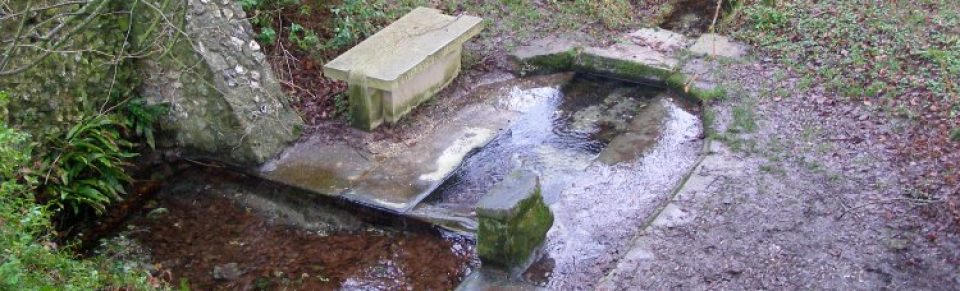
And the folk of Cerne created their idols to Helið in recognition of her deeds, and from that day until the coming of Augustine, they lived in harmony with one another and paid tribute to their goddess at the Seolfor Cwylla. Many now do not recall the deeds of Helið, but there are some that do and will always honour her. Should you pass through the village of Cerne in your travels, ensure you pay tribute to her at the Seolfor Cwylla, the Silver Well, which still runs to this very day through the heart of the village whilst the image of the defeated Þyrs remains imprinted for all time on the hill above it. On a moonlit night you may see her still, watching over the village and the hills above Cerne, bent and haggard with age and care, but determination burning from eyes of the purest silver.

Newer posts →
Follow The Silver Well Hearth on WordPress.com

Recent Posts

  • A Visit To Cerne
  • The First Yule – A Children’s Yule Play
  • Blog Closure
  • The Choir of Shadows
  • The Challenges of Private Praxis (and how to overcome them)

Blogs I Follow

  • Trúa á Þór
  • Forþ-weard
  • Ostriuwi
  • Sarenth Odinsson
  • Wandering Ambivert
  • Mīne Wyrtruman
  • The Postgrad Chronicles
  • Nature is Sacred
  • Wind in the Worldtree
  • Grennung Hund Heorþ
  • The Welsh Heathen
  • Lārhūs Fyrnsida
  • Bessus Nouiogalation
  • Of Axe and Plough

Blog at WordPress.com.

Trúa á Þór

Faith in Thor. A Heathenship with him at the heart of it.

Forþ-weard

Fyrnsidu for the Future

Ostriuwi

Continental Saxon Heathenry

Sarenth Odinsson

Heathen Spiritworker

Wandering Ambivert

Mīne Wyrtruman

An inclusive blog dedicated to Fyrnsidu (Anglo-Saxon Heathenry). Mine Wyrtruman has moved to www.minewyrtruman.com! See last blog post for details.

The Postgrad Chronicles

European Medieval History from the Viking Age to the Hundred Years' War

Nature is Sacred

Exploring Pagan Spirituality from an Anglo Saxon Druid Perspective

Wind in the Worldtree

A site for Fyrnsidu and Anglo-Saxon Heathenry

Grennung Hund Heorþ

The Welsh Heathen

Lārhūs Fyrnsida

Bessus Nouiogalation

Custom of the New Galatîs

Of Axe and Plough

Anglo-Saxon Heathenry and Roman Polytheism

  • Subscribe Subscribed
    • The Silver Well Hearth
    • Join 62 other subscribers
    • Already have a WordPress.com account? Log in now.
    • The Silver Well Hearth
    • Subscribe Subscribed
    • Sign up
    • Log in
    • Report this content
    • View site in Reader
    • Manage subscriptions
    • Collapse this bar
Loading Comments...